

Key Takeaways
- Myopia makes distant objects appear blurry while close ones stay clear.
- It typically develops between ages 5 and 14, and most cases stabilize as the body stops growing, often around age 20.
- Some adults continue to notice changes past their early 20s.
- Spending time outdoors may help slow progression in children.
- Regular eye exams help track changes and open up more options for managing myopia.
You sit down to watch TV from across the room, and everything looks a little fuzzy. Someone across the street waves, but you can’t quite make out their face. These are everyday moments that many people with myopia, commonly called nearsightedness, will likely recognize right away. At EyeQ Optical, we’re here to provide personalized care to help you understand what’s happening with your vision and what your options are.
Myopia is most often caused by the eye growing too long from front to back. Myopia often progresses during childhood and adolescence, then slows or stabilizes for many people as they reach adulthood. However, some adults continue to experience changes in their prescription.
Signs You May Have Myopia
Myopia doesn’t always announce itself loudly. For example, some children don’t realize their vision is blurry because they don’t know what clear vision is supposed to look like. Because of this, there are some signs to look for in yourself or family members:
- Trouble seeing distant objects, road signs, or screens clearly
- Frequent squinting or unexplained headaches
- Eye fatigue after everyday tasks like driving or watching TV
How Myopia Changes as You Get Older
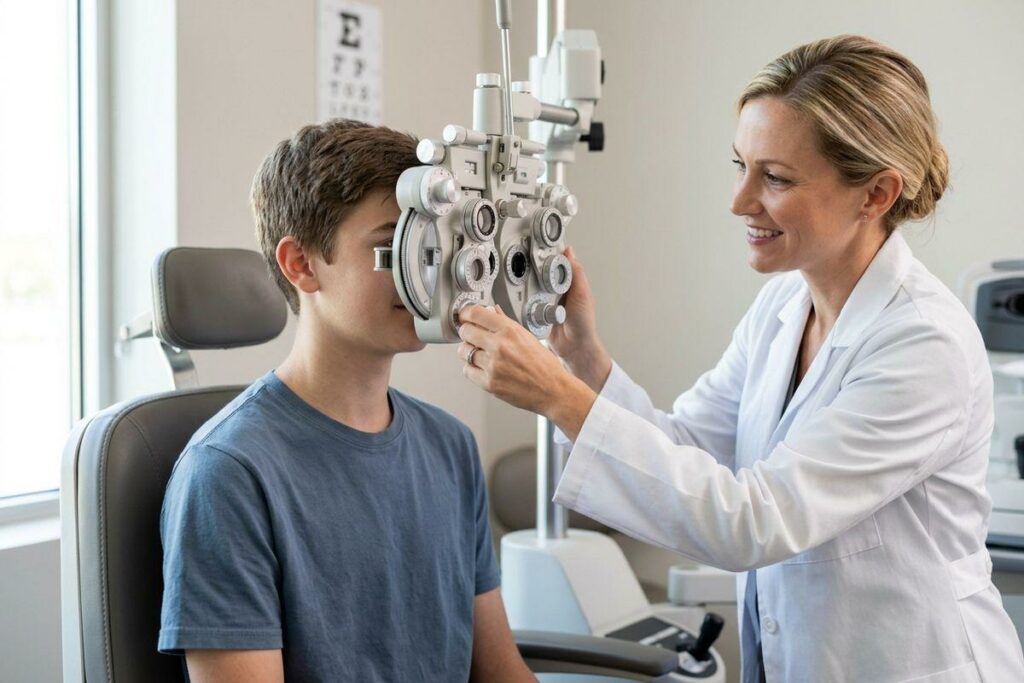
Myopia often starts during childhood, typically between ages 5 and 14. During those years, the eye is growing rapidly, which means the prescription can change from 1 year to the next. For most people, that progression slows down and stabilizes around age 20 once the body stops growing.
That said, not everyone follows the same pattern. Some adults continue to notice shifts in their vision past their late teens or early 20s, even if the changes are smaller than what they experienced as kids.
Does Myopia Worsen After 25?
For most adults, significant progression is less common after 25, but it can still happen. Heavy screen use has been associated with adult myopia changes, especially for people whose work or daily routines involve long hours of close-up focus. Your prescription may shift slightly even if your eyes stopped growing years ago.
What Makes Myopia Progress Faster
If myopia runs in your family, there’s a stronger chance your child may develop it, too. But day-to-day habits also matter more than many people realize.
Extended time spent on screens, reading, or other close-up tasks has been linked to a higher risk of developing myopia. For children especially, limited time spent outdoors has been associated with faster myopia progression. Research on outdoor time and myopia risk points to bright natural light and the visual experience of focusing on distant objects as factors that can help slow how quickly the eye changes.
Because of that, it’s often recommended that children spend 1 to 2 hours outside each day to help slow progression.
Vision Correction Options for Myopia
There are several ways to manage myopia depending on your age, lifestyle, and how your prescription has changed over time. Glasses for myopia remain a flexible and reliable option for most people. Contact lenses offer an alternative for those who prefer them, and orthokeratology, often called ortho-k, uses specially shaped lenses worn overnight to gently reshape the cornea so you can see clearly during the day without lenses.
For adults who want a more long-term correction, laser eye surgery can reshape the cornea to reduce the reliance on glasses or contacts. A thorough eye exam helps our team determine which option may fit your situation.
Myopia Management for Children
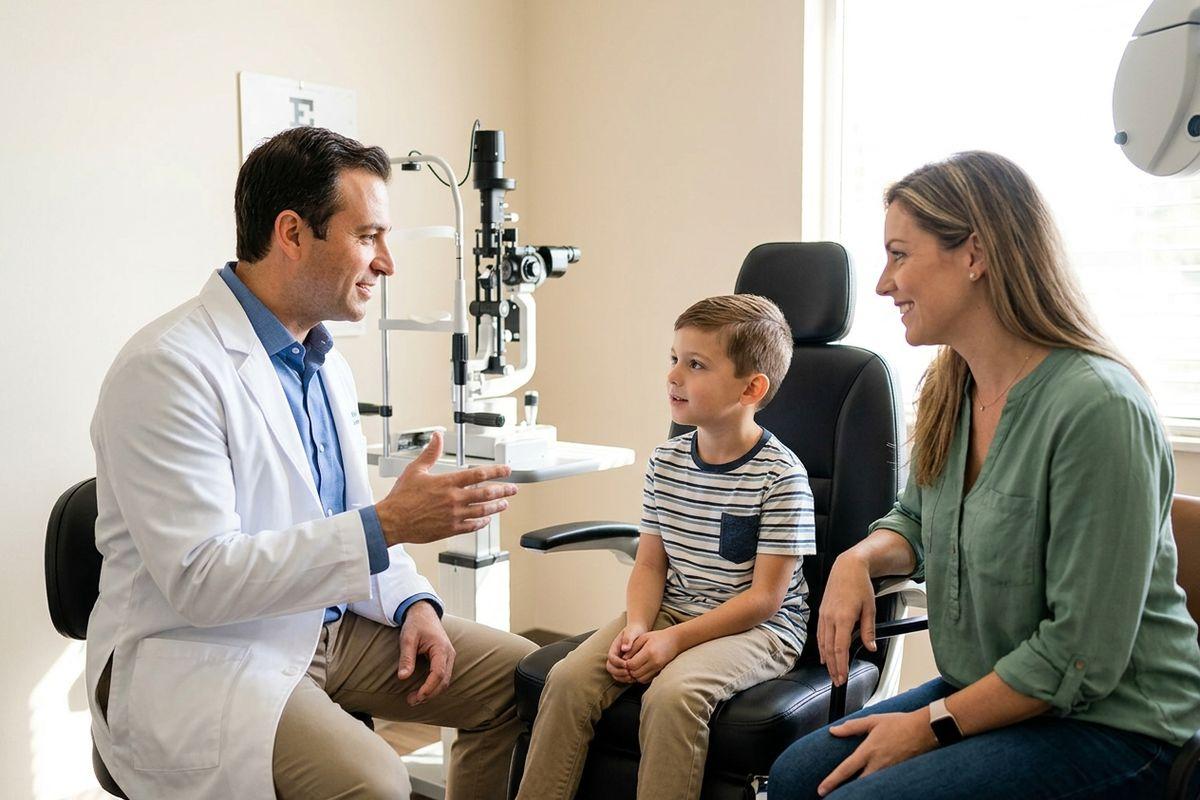
Children between ages 8 and 12 have specific options designed with them in mind. MiSight contact lenses are made to slow myopia progression in this age group. Ortho-k lenses are another option, worn overnight so kids can go through their school day with less reliance on glasses or contacts. Both options are worth discussing with your child’s eye doctor.
Why Regular Eye Exams Matter for Myopia
Keeping up with comprehensive eye exams gives you a clear picture of how your vision is changing. A prescription that worked well 2 years ago might not be giving you the clarity you need today. Catching those shifts early often means more time to explore the right management approach before changes progress further.
Our eye doctor in Cooper City can build a care plan around your specific needs, whether that’s updating your prescription, discussing myopia management for your child, or screening for related eye health concerns.
Schedule Your Eye Exam
Our team at EyeQ Optical is here to support your family’s visual health with personalized care at every stage. If you’ve been noticing that distant objects look blurry, we encourage you to schedule your next eye exam and take a closer look at what your vision needs.