

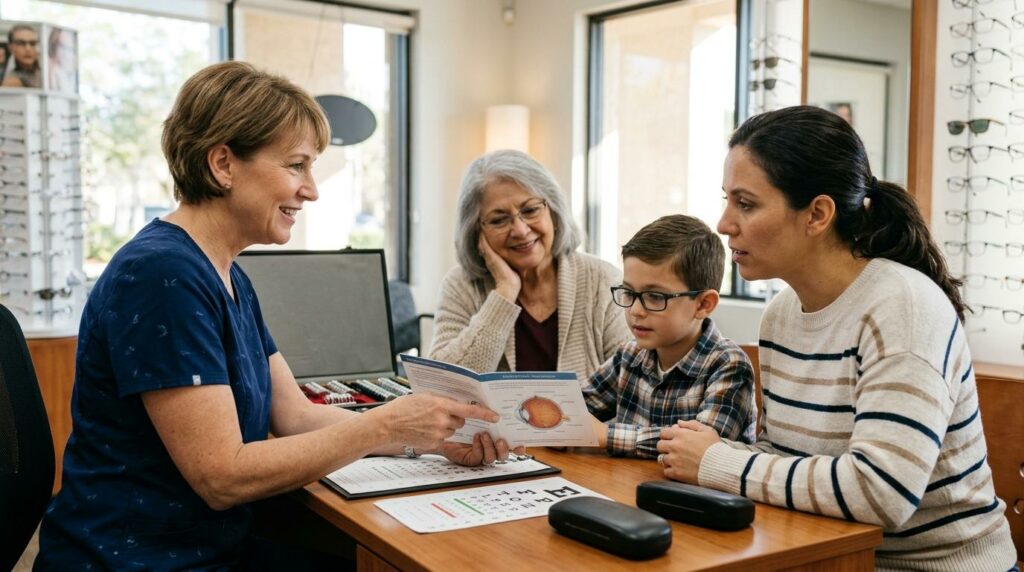
If your child keeps squinting at the TV or you find yourself struggling to read street signs, you might wonder what’s behind it. EyeQ Optical knows how important it is to get clear answers, especially when your child’s vision is involved. Myopia, or nearsightedness, is a common vision problem in children and adults, and it’s completely normal to wonder if it’s something your parents might have passed down to you.
While genetics does play a role in myopia, they’re only part of the picture. Your environment and daily habits may also shape how myopia develops and progresses over time.
The Link Between Genetics and Myopia
How Genes Affect Eye Development
Researchers have identified over 200 genetic regions linked to myopia risk. These genes influence how your eye grows and how it processes light, which directly affects whether images focus clearly on your retina (the back of your eye) or land just in front of it.
When the eye grows slightly too long from front to back, light focuses in front of the retina instead of right on it. That’s what makes faraway objects look blurry, and your genetic makeup can set the stage for this to happen.
Does Myopia Run in Families?
Your family’s history is a predictor of myopia. If 1 parent is nearsighted, a child’s chances of developing nearsightedness increase and if both parents have myopia, that risk increases further.
This doesn’t mean every child in the family will develop it, but knowing your family history helps you stay alert to early signs. The sooner you catch it, the sooner your child can get the support they need. Routine children’s eye exams are among the most helpful ways to stay ahead of changes.
Genes Alone Don’t Tell the Whole Story
Lifestyle Factors That Play a Role
Even with a higher genetic risk, your daily habits matter. More time spent on screens or doing close-up work, like reading or homework, has been associated with a higher risk of developing myopia. On the flip side, spending time outdoors in natural light and looking at distant objects seems to reduce the risk of nearsightedness in children.
Why Some Groups Have Higher Rates
Myopia rates vary significantly across different populations. In some East Asian countries, rates reach as high as 90% among young adults. This pattern points to a combination of genetic background and lifestyle factors, like longer hours of near work and less outdoor activity.
No single cause explains the full picture. Both where you come from and how you live your daily life contribute to your overall risk.
Are You Born with Myopia or Does It Develop?
When Myopia Typically Starts
Most people are not born with myopia. It typically develops during childhood or the early teen years, when the eyes are still growing. As the eye grows too long, the point of focus shifts, and distant objects start to look blurry.
This is why routine eye exams during childhood are so helpful. Catching changes early gives you more options for managing how myopia progresses.
How It Changes Over Time
Myopia can sometimes get worse between the ages of 8 and 15, as the eyes are often growing most rapidly during those years. For many people, it levels off in their early to mid-twenties once eye growth stabilizes. That said, how quickly it progresses and when the eyes stop growing varies from person to person.
Keeping up with regular eye exams during these years helps track any changes so adjustments to glasses or contact lenses can be made as needed. If you’re curious about how glasses correct myopia and what lens options exist, that’s a good place to start building your understanding.
Signs to Watch for in Your Child
Children often don’t realize their vision has changed because they adapt to what they see, and they assume that everyone else is seeing the same thing, too. You know your child better than anyone, so keep an eye out for these habits that may point to myopia developing:
- Squinting or sitting too close to screens or the TV
- Trouble seeing the board at school or copying notes from a distance
- Frequent headaches after reading, homework, or screen time
If you notice any of these in your child, scheduling an eye exam is a good next step.
What High Myopia Means for Long-Term Eye Health
Risks That Come with Higher Prescriptions
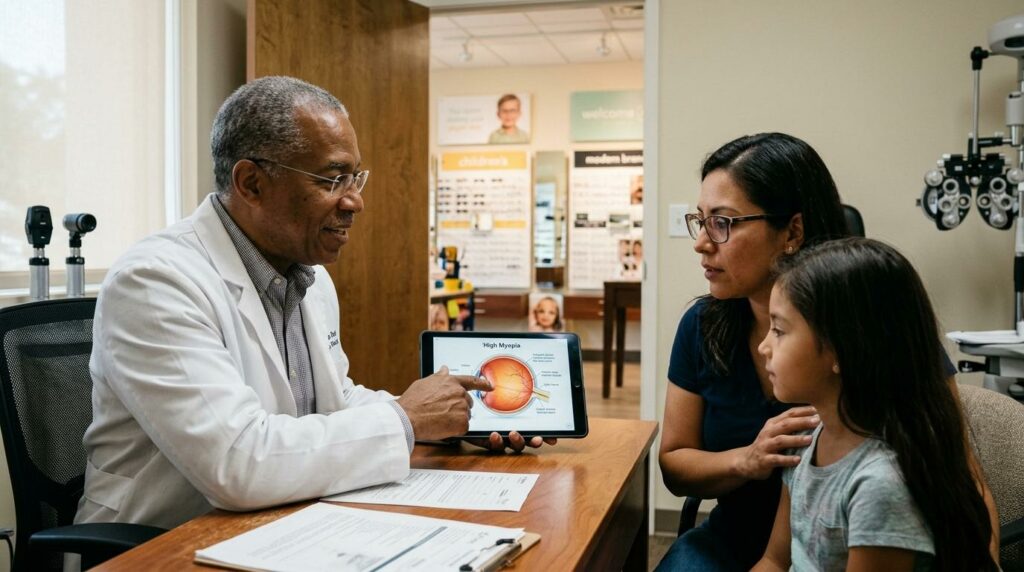
Mild myopia is very manageable, but higher levels of nearsightedness do come with added considerations. A stronger prescription is associated with a greater risk of complications later in life, like retinal detachment, glaucoma, and cataracts.
This is why monitoring myopia over time matters, not just for clear vision today, but for protecting your eye health in the long run. High myopia increases the risk of sight-threatening conditions, making regular evaluations an important part of long-term eye care.
How an Eye Doctor Can Help
Regular eye exams with our eye doctor in Cooper City can catch myopia progression earlier, when there are more options to slow it down. Our team at EyeQ Optical takes a personalized approach with each patient, looking at your family history, lifestyle, and current vision to build a care plan that fits your needs.
Schedule Your Family’s Visit
If your child has a family history of myopia or if you’ve noticed any of the signs mentioned above, reaching out to schedule an exam is a helpful place to start. Our team is here to support your family’s vision at every stage. Book an appointment today.